
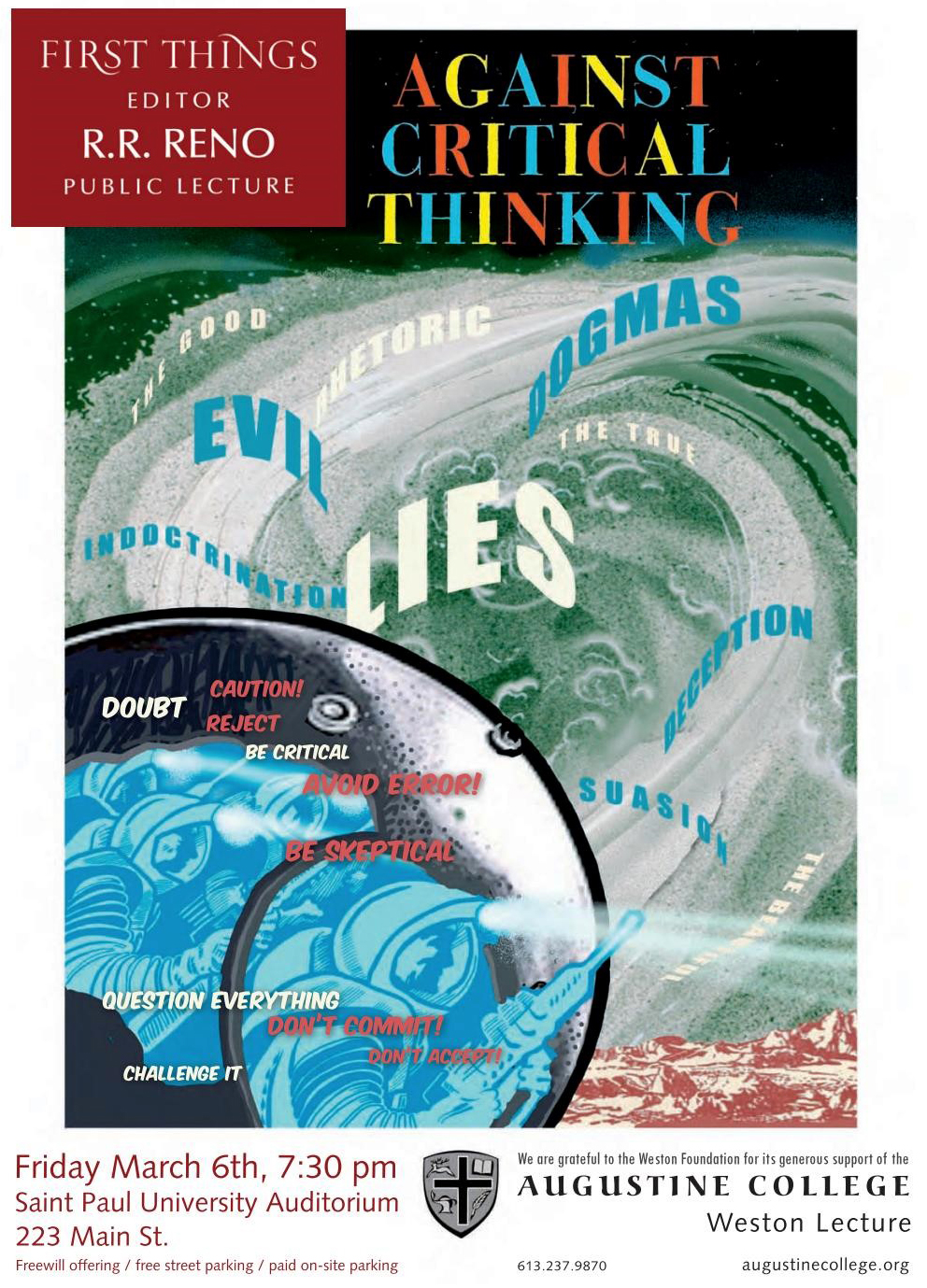
More here.
The folk at Pyromaniacs publish a portion of a sermon by Charles Spurgeon every Sunday morning, and this week they’ve posted something that could have been written by William James or John Dewey, the founders of the Pragmatic philosophy that conservative evangelicals routinely denounce.
Depend upon it that the way to learn more is to use what you know; and, moreover, the way to learn a truth thoroughly is to learn it experimentally. You know a doctrine beyond all fear of contradiction when you have proved it for yourself by personal test and trial.
This is the fundamental insight that gave rise to James’ “radical empiricism” and Dewey’s Instrumentalism: You know what is true by analyzing lived experience, instead of counting on stuff made-up out of thin air by delusional Bronze Age goatherders. Ideas are tools that we test and use to learn more and further refine how we live in the world.
“The greatest horror we can ever face is having our sin-filled lives held up before a holy God.” http://t.co/ymGjFD6iwb
— Desiring God (@desiringGod) March 8, 2015
Because — Never forget! — y’all are no damn good.
Ayn Rand deals nicely with Christianity’s central claim in Galt’s speech, in Atlas Shrugged.
Death is the standard of your values, death is your chosen goal, and you have to keep running, since there is no escape from the pursuer who is out to destroy you or from the knowledge that the pursuer is yourself. Stop running, for once — there is no place to run — stand naked, as you dread to stand, but as I see you, and take a look at what you dared to call a moral code.
Damnation is the start of your morality, destruction is its purpose, means and end. Your code begins by damning man as evil, then demands he practice a good which it defines as impossible for him to practice. It demands, as his first proof of virtue, that he accept his own depravity without proof. It demands that he start, not with a standard of value, but with a standard of evil, which is himself, by means of which he is to then define the good: the good is that which he is not. [ … ] The name of this monstrous absurdity is Original Sin.
Think back, now, to all the death-wish theology you’ve listened to in church, all the times that you have heard yourself told that the good is self-annihilation, the total elimination of your self-interest and self-direction, because your self is rotten and putrid and evil.
Then marvel at all the retweets and favoriting of Piper’s tweet, and ask yourself what is the psychological state of the people who do that.
Book Two: A Criticism of the Highest Values That Have Prevailed Hitherto
I: Criticism of Religion§237 On one side there are the serious, the dignified, and reflective people: and on the other the barbarous, the unclean and the irresponsible beasts: it is merely a question of taming animals and in this case the tamer must be hard, terrible and awe-inspiring, at least to his beasts.
All essential requirements must be imposed upon the unruly creatures with almost brutal distinctness, i.e., that is to say, magnified a thousand times. Even the fulfilment of the requirement must be presented in the coarsest way possible, so that it may command respect, as in the case of the spiritualisation of the Brahmins.
* * * The struggle with the rabble and the herd. If any degree of tameness and order has been reached, the chasm separating these purified and regenerated people from the terrible remainder must have been bridged –. This chasm is a means of increasing self-respect in higher castes and of confirming their belief in that which they represent, hence the Chandala. Contempt and its excess are perfectly correct psychologically, that is to say, magnified a hundred times, so that it may at least be felt.
Book Two: A Criticism of the Highest Values That Have Prevailed Hitherto
I: Criticism of Religion§236 A. In proportion as Christianity seems necessary to-day, man is still wild and fatal –. B. In another sense, it is not necessary, but extremely dangerous, though it is captivating and seductive, because it corresponds with the morbid character of whole classes and types of modern humanity — they simply follow their inclinations when they aspire to Christianity; they are decadents of all kinds.
A and B must be kept very sharply apart.
In the case of A, Christianity is a cure, or at least a taming process (under certain circumstances it serves the purpose of making people ill: and this is sometimes useful as a means of subduing savage and brutal natures). In the case of B, it is a symptom of illness itself, it renders the state of decadence more acute; in this case it stands opposed to a corroborating system of treatment, it is the invalid’s instinct standing against that which would be most salutary to him.
