
In the upper midwest

It’s true that the south does not have the snow and sometimes-brutal cold of the upper midwest, but the south also does not have the colors of autumn. Though a lot of last week’s trip to Michigan’s northern Lower Peninsula was overcast, there was no missing the seasonal change.
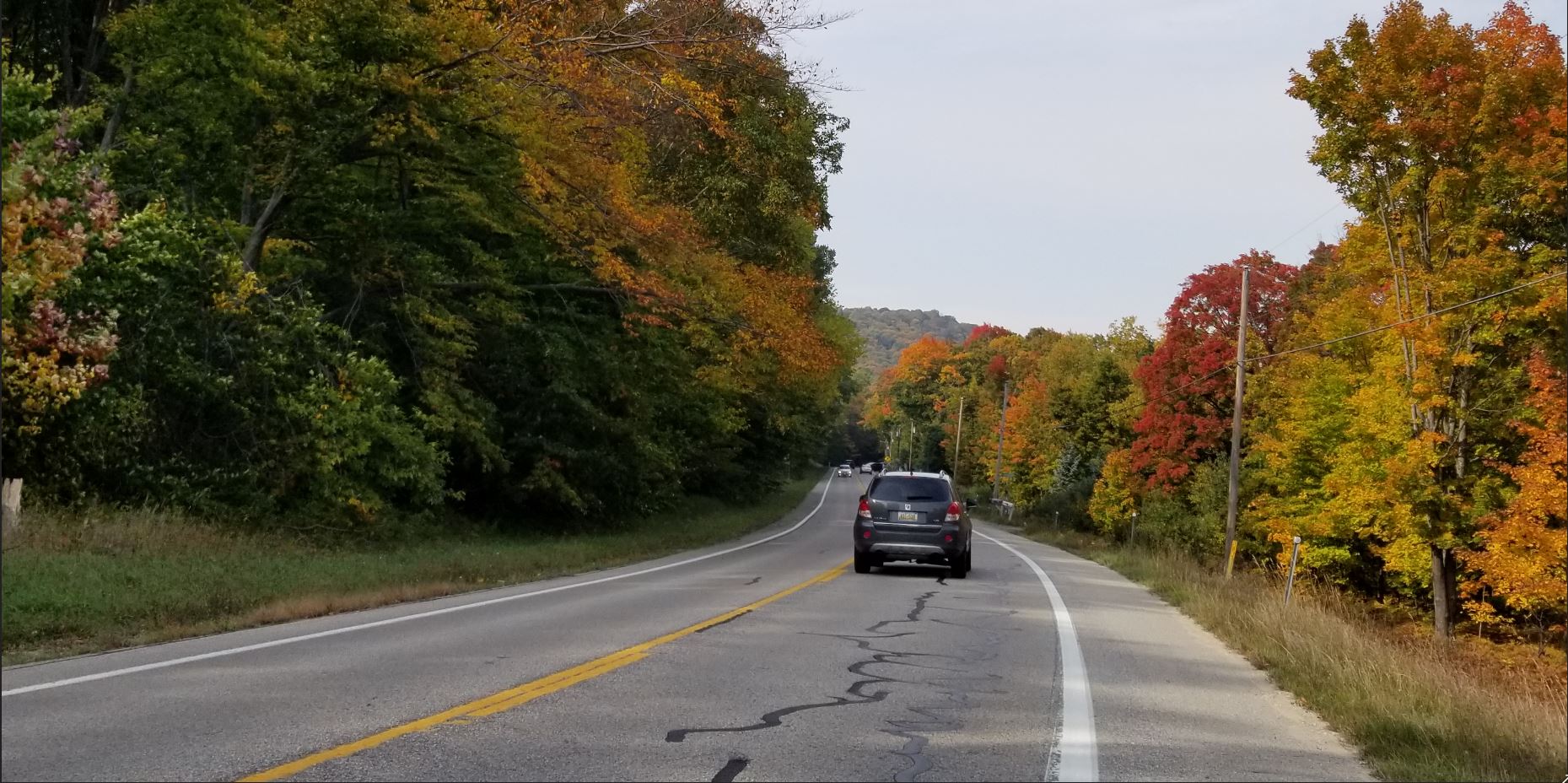
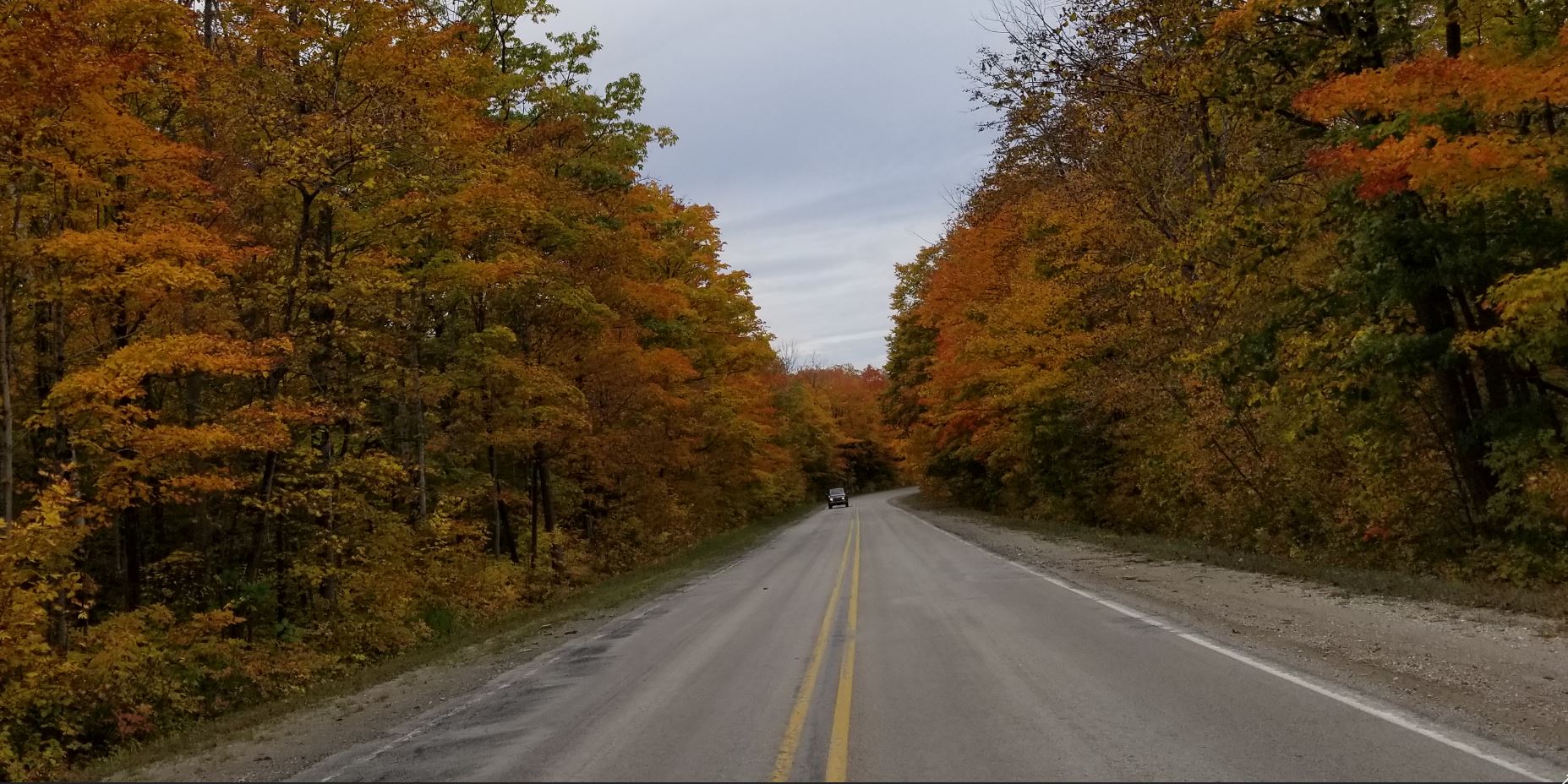
Dawn and I stayed off the highways and stuck to the two-lane state roads, traveling north along the west side of the Lower Peninsula near Lake Michigan, and then south on the east side along the edge of Lake Huron. Some miscellaneous observations:

  • We saw only two Confederate flags the entire while. Similarly, there is nowhere the density of churches in rural northern Michigan as in rural North Carolina. In other words, there are a lot fewer backward-looking reactionaries up there.

  • Michigan has done a lousy job of protecting public access to the Great Lakes. Lake Michigan is practically unapproachable, and Lake Huron is easily accessed in only the northernmost quarter of its shoreline.

    Lake Superior is easily accessed everywhere. I don’t know, though, if that is because the winters are so miserable in the Upper Peninsula that there is a lot less development, or if the National Lakeshore designation prevents development.

  • In spite of the gabble about “southern hospitality,” midwesterners are far more direct, open, and friendly than southerners. It is a different culture, and healthier.
Posted in General | Leave a comment

Reset

Dawn and I are headed to northern Michigan for the fall colors; posting will resume October 15th.

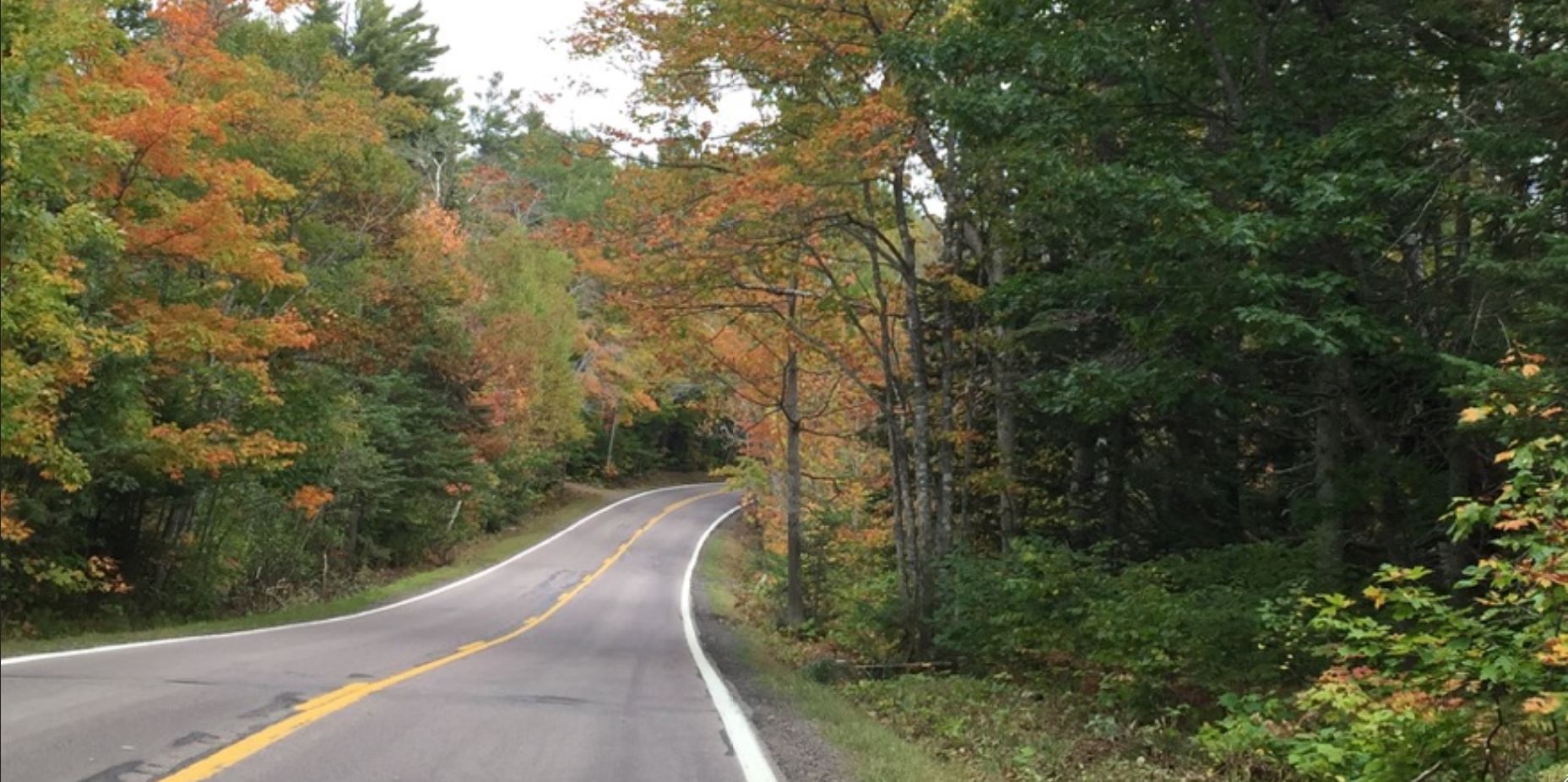
Road to Copper Harbor, 2017

Posted in General | Leave a comment

Deepity of the day

I’ve about decided that people who can’t tell that John Piper is an idiot with nothing useful to say actually are no damn good.

Posted in General | Leave a comment

Back to the future

It’s easy to say that Christianity is untrue, that its teachings are degrading, and that its ethics are grounded in cultism … but what then? What replaces Christianity and provides a framework for thinking about the world and our place in it? How does one approach Socrates’ question without a bellowing Holy Man: How, then, shall we live?

If publishing trends can be trusted, a lot of people are looking toward Stoicism, a pre-Christian philosophical movement nearly wiped-out when the Roman church seized control of the western half of the Roman empire following Rome’s collapse. Just this year has seen publication of Ward Farnsworth’s The Practicing Stoic, Massimo Pigliucci”s How to be a Stoic, and — get ready — even a book of daily devotionals by Ryan Holiday, The Daily Stoic.

Stoicism, a philosophical movement born more than 2000-years ago and advanced by figures as different as a former slave, Epictetus, and an emperor, Marcus Aurelius, is … in.

So: What is Stoicism? First, it is not an urging to suffer quietly, though that seems to be a widespread misapprehension. Nor is Stoicism a philosophical system complete with an epistemology, a politics, a metaphysics, on and on. It does not make specific claims about the world — created in 7-days, a global flood, gays are wicked, et cetera, et cetera. Stoicism is, simply put, a set of behavioral guidelines intended to get its practitioner through life in an ever-changing world happily and in one piece; think of it as practical philosophy, a set of commandments without a dyspeptic old man with a long beard.


“Christianity cheated us out of the fruits of ancient culture, and later it cheated us a second time out of the fruits of Islamic culture.”

Nietzsche, 1889;
The Antichrist, §60


If Stoicism interests you, the best book to read is Epictetus’ Manual for Living, which are notes of his lectures compiled by his students. He is refreshingly direct and highly accessible and, generally, offers good advice.

What interests me the most about this trend, I suppose — more than Stoicism per se — is the restoration of the classical world, the recovery of the world of thought that Christianity set out deliberately to destroy.

Considered that way, this present time is a waypoint on the road out of Christian decadence, a weighing and sifting of what is best and most enduring in human thought; it’s a very good thing.

Posted in General | 1 Comment

Ford v. Kavanaugh, again

Watching the news this weekend, and reading newspaper opinion pages, I was struck by how predictable and empty a lot of the commentary was. In no particular order, a list of things that ought to be part of the discussion.

  • According to her own statement, Concerned Citizen Ford sent her letter to Senator Feinstein with the expectation that her anonymous allegations would be passed along to the Buffoon-in-Chief, and Kavanaugh would lose his place on Trump’s list of Supreme Court candidates. What this amounts to is that Ford intended to quietly, surreptitiously, underhandedly, and with no accountability, blacken his name and derail his career — without affording Kavanaugh an opportunity to answer the charges or, for that matter, even know that charges had been made.

    This is, literally, Kafkaesque. Could we please be done with breathless encomiums about Ford’s courage? The look of things to me is that her deviousness backfired.

  • Assuming her account is true, Ford’s experience was not remotely analogous to the abuse scandals that have implicated so many clergy. Kavanaugh, after all, was just a kid whose family had a membership at the same country club — not a figure of authority before whom even her parents were deferential. What is more, her parents would almost certainly have believed her if she told them what had occurred. There would probably have been a conversation between Ford’s parents and Kavanaugh’s parents, and plenty of mutual dislike — and that would probably have been the end of it. I’m not seeing the setup for a lifelong trauma.

  • This was a small gathering, not one of those rowdy affairs where dozens of people come and go and wander in an out over the course of hours — and in which it’s entirely plausible that a buzzed 15-year old might misidentify somebody she knows only casually. Whatever transpired happened between Ford and Kavanaugh.

  • When oligarchs are spending money to broadcast television commercials urging confirmation of a Supreme Court nominee … they ain’t doing it because they think Kavanaugh is good for the Gool Ol’ U.S. of A., they’re doing it because they think Kavanaugh is good for them — and that should make the rest of us uneasy and serve as an exhibit against confirmation.

  • Kavanaugh should not be expected to serve as a stand-in, or proxy, for every man who has ever mistreated a woman — which is what those nuisances who confronted Senator Flake are doing. To find Ford underhanded and less than convincing is not to say that women don’t matter or to tell your children that mistreating women is acceptable.

  • There is a good reason that teenagers are not allowed to purchase alcohol, vote, or enter contracts, and that reason is that teenagers are immature and stupid. That observation raises, in turn, the question of how long teenage misbehavior should follow somebody around. People will disagree about that, and disagree in good faith — but it’s a question that is germane to the Kavanaugh nomination and we ought to be thinking about it more seriously than we seem to be.

As I’ve said elsewhere, there are sound reasons to reject kavanaugh, and they are reasons grounded in a well-established record; those reasons should prevail. And this distracting sideshow, which is probably not susceptible of objective resolution, ought to end.

Posted in General | 1 Comment